
You’ve seen the word “prefinished” on flooring labels, showroom tags, and product listings dozens of times. It sounds like marketing speak, and most shoppers scroll right past it without a second thought. That single word actually tells you how the floor was made. It also reveals how long the installation will take. Most importantly, it determines whether you’ll be tiptoeing around the wet finish for a week or walking on your new floors the same day. Knowing what “prefinished” means helps you shop smarter, especially when browsing a prefinished solid hardwood flooring sale where the savings add up fast.
What Does Prefinished Actually Mean?
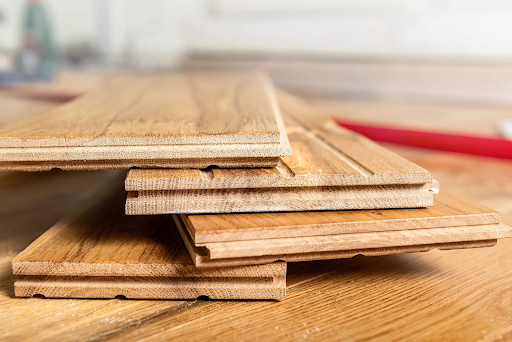
Prefinished means the hardwood plank arrives at your home already sanded, stained, and sealed by the manufacturer. The factory completes every finishing step in a controlled environment, so the boards ship with a fully cured protective coating ready for installation.
Unfinished flooring takes the opposite approach because those planks show up as raw wood without any surface treatment. Your installer then handles all the sanding, staining, and sealing on site, which fills your home with dust and fumes while you wait several days for each coat to dry. Prefinished flooring eliminates that entire process, allowing your installer to secure the planks and hand you a walkable floor the same day.
From Log to Plank: Where Production Begins
Every prefinished board starts as a freshly cut log at the mill, where workers slice the timber into rough planks. These planks then move into large industrial ovens called kilns that slowly pull moisture out of the wood over several days or weeks, depending on the species.
- Target moisture content lands between 6% and 9% for indoor applications
- Tongue-and-groove milling cuts interlocking edges once the wood reaches proper dryness
- Quality teams inspect every board for oversized knots, cracks, and grain defects
- Rejected planks get removed before entering the finishing line
This careful drying process prevents warping, cupping, and bending after the floor settles into your home.
How Factory Sanding and Staining Works
Factory sanding moves each plank through a series of abrasive belts mounted on industrial machines, starting with coarse grits that remove surface roughness and progressing to finer grits that create a silky texture. Vacuum systems capture sawdust instantly, which leaves a perfectly clean surface ready for stain application.
- Spray applicators or rollers distribute color evenly across each plank face.
- Controlled temperature and humidity ensure consistent absorption from board to board.
- Every plank in a production batch dries at the same rate, with matching color results.
On-site staining works differently because the outcome depends on the installer’s technique, room conditions, and airborne particles that settle on wet surfaces. Factory staining eliminates those variables, which is why contractors often recommend shopping a prefinished solid hardwood flooring sale when color consistency matters most.
The Protective Finish That Sets Factory Floors Apart
The topcoat stage is where factory production gains its biggest advantage over site finishing. Manufacturers mix aluminum oxide into their finish formula before application, and this hard mineral compound embeds into the coating to create a protective shield against scratches, scuffs, and daily wear.
Once the topcoat goes on, planks roll under powerful ultraviolet lights that trigger a chemical reaction and harden the surface in seconds.
- Traditional polyurethane requires 24 to 48 hours of drying time between coats.
- Site-finished floors need three to seven days of total curing before use
- UV-cured finishes reach full hardness before the plank ever leaves the factory
- Premium formulas containing ceramic or titanium compounds last 20 to 30 years
Why Factory Finishing Is More Consistent Than Job Site Finishing
Humidity plays a critical role in how finishes cure because excess moisture slows drying and traps tiny bubbles beneath the surface. Low humidity creates the opposite problem by speeding up curing too quickly and leaving brush marks or a blotchy sheen.
- Factory humidity stays locked between 35% and 55% regardless of season
- Industrial air filtration removes particles that would roughen wet coatings
- Stable temperatures ensure each layer cures at a predictable, even pace
- These tight controls reduce material waste and keep production costs down
Construction zones cannot replicate these conditions because drywall dust, sawdust, and foot traffic constantly contaminate wet surfaces.
The Trade-Off: Less Customization, More Durability
Prefinished flooring limits your color choices to what manufacturers already produce because custom stain mixing is not possible when finishing happens at the factory. Homeowners restoring historic properties or matching rare trim colors may find unfinished planks better suited for that level of customization.
Most buyers browsing a prefinished solid hardwood flooring sale discover plenty of variety without needing custom work.
- Sheen options range from matte and satin to semi-gloss
- Popular species include red oak, white oak, hickory, maple, and walnut
- Plank widths span from 3 inches to 7 inches or wider
- Wire-brushed and hand-scraped textures add visual character and depth
This trade-off works in favor of most homeowners because factory finishing delivers superior durability along with same-day usability.
Can prefinished hardwood floors be refinished later?
Solid prefinished boards can be sanded and refinished multiple times throughout their lifespan. The wear layer thickness determines how many refinishes the floor supports, and most solid planks handle three to five sandings before reaching the tongue-and-groove profile.
Is prefinished flooring more expensive than unfinished?
Material cost per square foot runs higher, but total project cost usually drops because you eliminate on-site sanding, staining, and finishing labor. These savings offset the higher material price for most residential and commercial installations.
Final Thoughts
Prefinished hardwood flooring gives you a surface that is ready to use as soon as installation ends. The factory process controls sanding, staining, and sealing, which results in a tougher finish, consistent color, and a faster turnaround on site. That level of reliability is hard to match with traditional finishing methods.
Once you understand how these floors are made, the value becomes clear. You save time during installation and avoid the extra labor that often increases overall costs.
For contractors and homeowners planning a flooring project, having access to quality materials and knowledgeable guidance can make the process much easier. Rustic Wood Floor Supply works with a wide range of hardwood products and helps customers choose flooring that fits both the space and the installation requirements.