
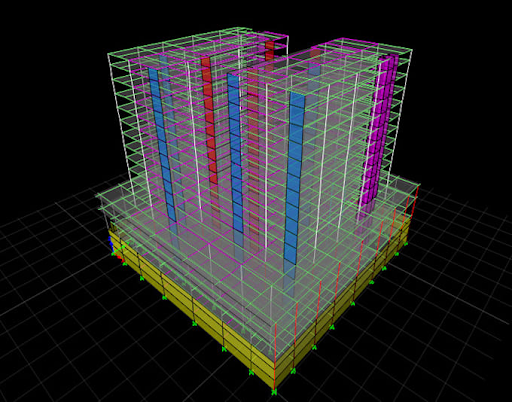
Structural engineers rely heavily on advanced digital tools to design safe, efficient, and cost-effective buildings. Among these tools, ETABS has become one of the most widely used software solutions for analyzing and designing multi-storey structures. It helps engineers understand how buildings respond to different loads such as wind, seismic forces, and gravity.
Learning these tools through an ETABS course is now an essential step for students and professionals who want to build a strong career in structural engineering. With increasing demand for skilled designers, structured learning from a civil engineering training center plays a key role in developing industry-ready professionals.
What is ETABS, and Why is it Important?
ETABS is a specialized structural analysis and design software developed specifically for building systems. It allows engineers to create 3D models of buildings and simulate real-world conditions to evaluate structural performance.
A well-structured ETABS learning course teaches how to model beams, columns, slabs, shear walls, and core structures efficiently. It also helps engineers perform load calculations and check building stability under different scenarios.
The importance of ETABS lies in its ability to reduce manual calculation errors and improve design accuracy. This is why most construction firms expect engineers to have hands-on knowledge gained from an ETABS training program before entering the industry.
How ETABS is Used in Structural Engineering
ETABS plays a critical role in various stages of structural design. Engineers use it to:
- Create detailed 3D building models
- Apply different load combinations
- Analyze structural response under stress
- Design reinforced concrete and steel elements
- Optimize material usage for cost efficiency
A professional ETABS learning course focuses on teaching these practical applications rather than just theoretical concepts. It ensures that learners can directly apply their knowledge to real construction projects.
A reputed civil engineering training center often integrates real-world project simulations into the learning process, helping students understand how ETABS is used in actual industry scenarios.
Role of ETABS in Building Design and Safety
Building safety is one of the most critical aspects of construction engineering. ETABS helps engineers ensure that structures can withstand natural forces such as earthquakes and high winds.
Through an ETABS training program, learners understand how to evaluate structural integrity and identify weak points in a design. This reduces the risk of failure and improves overall safety standards.
An advanced ETABS learning course also introduces concepts like performance-based design and dynamic analysis, which are essential for modern high-rise buildings. These skills are highly valued in any civil engineering training center that focuses on industry-ready education.
Why Learning ETABS is Essential for Civil Engineers
The construction industry is rapidly evolving, and digital design tools are now a necessity rather than an option. Engineers who are proficient in ETABS have a significant advantage in the job market.
Enrolling in an ETABS training program helps students gain practical knowledge of structural modeling, analysis, and design. It bridges the gap between academic learning and industry requirements.
A structured ETABS software course ensures that learners not only understand software tools but also the engineering principles behind them. This combination of theory and practice is what most employers look for.
A professional civil engineering training center also provides exposure to real projects, helping students develop confidence in handling complex structural challenges.
Key Skills You Learn in ETABS Training
A comprehensive ETABS training program covers several important skills, including:
- Structural modeling of multi-storey buildings
- Load analysis and design optimization
- Earthquake and wind load calculations
- Reinforced concrete and steel design
- Interpretation of analysis results
A detailed ETABS learning course ensures that students gain both technical and practical expertise. These skills are essential for working in design offices, consultancy firms, and construction companies.
A reliable civil engineering training center ensures that learners get hands-on experience with industry-standard projects, which significantly improves employability.
Industry Applications of ETABS
ETABS is widely used in real-world construction projects such as:
- Residential apartments
- Commercial towers
- Industrial structures
- Infrastructure buildings like hospitals and malls
An advanced ETABS learning course prepares engineers to handle these types of projects with confidence. It focuses on real-time design challenges that engineers face in professional environments.
A strong ETABS training program also helps learners understand how design decisions impact cost, safety, and sustainability in construction projects.
Career Opportunities After Learning ETABS
Completing an ETABS training program opens up multiple career paths in structural engineering. Graduates can work as:
- Structural design engineers
- Site engineers
- BIM modelers
- Construction consultants
A professional ETABS learning course enhances technical confidence and makes candidates more competitive in interviews. Many companies prefer hiring candidates trained at a reputed civil engineering training institute because they already possess job-ready skills.
How ETABS Transforms Civil Engineering Education
Traditional civil engineering education often focuses heavily on theory. However, the integration of ETABS into training programs has transformed the learning experience.
A modern ETABS training program provides practical exposure to real design problems. Students learn how buildings behave under different conditions, making their understanding more practical and application-oriented.
A structured ETABS learning course ensures continuous skill development through project-based learning. This approach is widely adopted by leading civil engineering training center programs to prepare students for real-world challenges.
Conclusion
ETABS is a key tool in modern structural engineering, enabling accurate analysis, efficient design, and improved building safety. An ETABS course helps engineers develop practical, industry-relevant skills for real-world projects. A structured ETABS learning course strengthens technical understanding of modeling and design, while a trusted civil engineering training center provides hands-on training, project exposure, and career-focused learning that prepares students for professional success in the construction and design industry.