
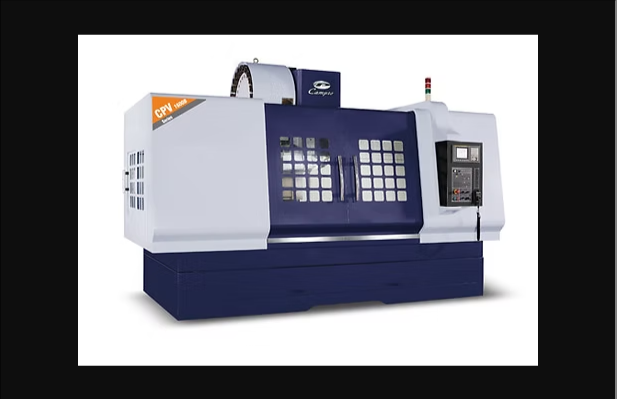
Upgrading a CNC vertical machining center can deliver outsized returns without replacing proven iron. Smart retrofits—on-machine probing, 4th/5th-axis trunnions, and lights-out workflows—shrink setup time, stabilize quality, and unlock unattended throughput. When implemented as a cohesive system, these upgrades convert capable 3-axis platforms into versatile production cells ready for complex part families and longer spindle-on hours.
Why Retrofit a CNC Vertical Machining Center Instead of Replacing It
A rigid casting, healthy spindle, and accurate axes remain valuable for years; what typically limits output is setup friction, multi-face workholding, and variability between runs. Retrofitting preserves the structural strengths of a CNC vertical machining center while injecting technology that compresses non-cut time, improves first-pass yield, and expands part mix—often at a fraction of new-machine CapEx.
Probing: Cut Setup Time and Scrap at the Source
On-machine probing is the fastest-payback upgrade for most shops. It shifts alignment, offsetting, and critical checks into the machine envelope so the spindle spends more time cutting.
- Workpiece location and rotation: Automatically set and rotate work coordinates (G54, G55, etc.) off a bore, boss, or edge—no more tapping parts into alignment or dialing vises.
- In-process verification: Probe pocket depths, bores, and datums mid-cycle; drive tool wear compensation and conditional re-cuts to keep parts in spec without removing them from the fixture.
- Tool setting and break detection: Automate tool-length/diameter offsets and stop the cycle on a broken tool before an entire tray of parts is scrapped.
Implementation essentials:
- Calibrate regularly and account for thermal drift during long cycles.
- Standardize macro templates so operators deploy the same proven routines every time.
- Store probe routines with your job process plan to ensure repeatable results across shifts.
Trunnions: Add Angular Reach and Collapse Setups
A trunnion-equipped VMC turns multi-face parts into one-and-done operations and paves the way to 3+2 or even simultaneous positional work.
- Consolidated operations: Tilt and index to expose new faces without refixturing, reducing tolerance stack-ups and improving true position.
- Higher part density: Pyramid fixtures or modular dovetail systems boost parts-per-cycle, ideal for families with similar footprints.
- Better geometry control: Machining in a single clamp improves perpendicularity, parallelism, and feature-to-feature relationships.
Selection checklist:
- Payload and torque: Size for heaviest part plus fixture and clamping forces.
- Brake holding power: Ensure rigidity under worst-case cutting forces and stick-out.
- Clearance and travels: Confirm swing and Z-height with your longest tools and tallest fixtures.
- Control integration: Verify rotary definitions, tilted work planes, and post-processor support for clean 3+2 indexing or simultaneous moves.
Process tips:
- Start with 3+2 for maximum rigidity and simpler programming.
- Validate collision zones offline; add soft limits and safe retracts in posts and macros.
- Use fixed datums on modular fixtures to streamline changeovers.
Lights-Out Workflows: Engineer for Certainty
Unattended machining is less about robots and more about certainty—tools, chips, coolant, workholding, and detection must behave while no one’s watching.
Core pillars:
- Tooling strategy: Use sister tools for wear-heavy ops, conservative night feeds/speeds, and tool-life counters tied to conditional logic.
- Chip control: Program chip breaks, add air blasts or through-spindle coolant, and schedule chip-clear routines between pallets or cycles.
- Coolant reliability: Filtration, level sensors, and concentration checks reduce alarms and extend tool life.
- Part presence and verification: Probe raw stock at load; verify critical features post-op; branch the program on pass/fail for safe continuation.
- Workholding discipline: Zero-point bases or self-centering vises with positive stops ensure repeatable seating; air blow-offs and sensing help confirm clamping.
Automation pathways:
- Begin with multi-part fixturing or pallet changers to extend cycle time beyond staffed hours.
- Add cobot or gantry loading only after fixtures and part presentation are statistically reliable.
- Gate unattended jobs to proven toolpaths and materials; ramp up duration as data confirms stability.
Control, Programming, and Data: The Operational Glue
- Post processors: Update posts for rotary kinematics, tilted work planes, and probing cycles; validate with backplot/simulation before first article.
- Macro libraries: Standardize probing, tool-break checks, safe retracts, and recovery routines to handle interrupts cleanly.
- Run data capture: Log offsets, probe measurements, tool loads, spindle alarms, and cycle outcomes—closing the loop is how unattended windows grow.
Metrology-Led Speed: Measure to Go Faster
- First-article probing: Establish datums and check key features; auto-comp offsets to center the process.
- In-cycle SPC: Probe periodic samples and adjust proactively rather than reacting to out-of-spec results.
- Thermal management: Warm-up cycles and periodic calibration keep geometry stable during long shifts.
Practical Retrofit Roadmap
- Probing package + standard macros for work and tool setting
- Workholding system (zero-point/dovetail/modular vises) with fixed datums
- Trunnion integration with verified posts, safe zones, and clearance studies
- Tool management (presetters, sister tools, life counters, break detection)
- Chip/coolant reliability upgrades (filtration, sensing, evacuation routines)
- Palletization or cobot loading to extend unattended windows
Cost and Payback Framing
- Probing typically pays back in weeks through setup compression and scrap avoidance.
- Trunnions return via setup consolidation, datums tightened in one clamp, and higher part density.
- Lights-out converts a single staffed shift into 1.5–2 shifts of productive spindle time with minimal added headcount.
Conclusion
A well-planned retrofit can transform a CNC vertical machining center into a flexible, metrology-driven production asset. Start by eliminating guesswork with probing, collapsing multi-face work using trunnions, and then engineer certainty for lights-out workflows. As families grow in complexity and unattended time increases, some operations will naturally progress toward a 5 axis vertical machining center—but with the right strategy, today’s CNC vertical machining delivers competitive throughput, tighter geometry, and reliable capacity without the cost and downtime of full replacement.


